
Symphony

Cadence of Conflict: Asia, July 4, 2016

We see the psychology of Chinese cultural leadership on full display. China stopped communicating with Taiwan. An accidental firing of a live missile, killing one and injuring two, on a parked Taiwanese naval corvette was judged to indicate a “loose screw” in Taiwan’s military leadership.

The KMT-Nationalists from Mainland China have been managing Taiwan’s military for the last several years. The sailor responsible for the accidental firing was fatigued on the day of an inspection. They didn’t use a two-person firing system; it only took one sailor to fire. The Taiwan incident indicates “Mainlander” leadership, not the leadership of the opposition party that only took power within the last few months. We still don’t know how that new leadership will turn out. But, refusing to capitulate to China’s unilateral definitions is a good indication that Taiwan has strong leadership.

As for the force controlling China’s Mainland, the Communists, they are on trial over their activity in the South Sea. What is their solution? They hold more Naval exercises in the very waters they are being pressed over. Usually when a man is on trial, it is best if he pretends to be weak. While Beijing loudly denies it, actions indicate thoughts that a “show of force” will soften the decision of the international courts—because that works with Chinese courts, just as it works when the KMT did it with courts in Taiwan. However, the West will see China’s navel drill as further inditing evidence—of either excessive force or lack of discretion.

China is making it difficult for even Russia to come to their defense. Taiwan is making it difficult for America to want to give them missiles, unless meaningful changes happen soon, but that’s too soon. Taiwan claims to see the need for changes, but we’ll see. Beijing apparently thinks the opposite and then says opposite of that. The wise should be concerned over any force that doesn’t know his own situation.

By demonstrating the same worldview in both militaries, we can suspect that similar antics and accidentals are already happening in both. But there is another factor: Communication.

By cutting the “communication mechanism” with Taiwan over a unilaterally defined “one China”, China thinks it is making a power move, when actually, it has sabotaged its own intel gathering. More importantly, in the eyes of the watchful West, China proves that it doesn’t mean what it says. By not communicating with Taiwan over the “one China” concept—according to its own “one China” claim—China is not communicating with itself. That means that China never really believed its own “one China” idea in the first place.

continue reading

Standard
Symphony

Cadence of Conflict: Asia, June 20, 2016

Last week, Taiwan’s president forgot the law that his own political party created as a means of controlling the other political party, that won in a landslide. The Japanese seem to have a better memory. Abuse of international agreements has irritated Okinawans for over half of a century. A recent murder committed by US personnel at the base in Japan initiated more protests and more are anticipated.

The US and Taiwan Navies also anticipate responses from China. Taiwan announced 12 new vessels, pushing the program with large amounts of PR. There will even be an open house in Kaohsiung where the public can learn all about the beefing-up of Taiwan’s Navy. The US rescheduled a Stinin-Reagan sail-by off the Philippines, hoping to make waves, weeks before Hague rules on China’s nine-dash line. The US made no attempt to hid that the exercise was rescheduled early, just to make a point.

Hong Kong’s booksellers also remember. A recently detained and released seller led protests in Hong Kong. Unlike all other territories with public displays this week, Hong Kong does not supply its own military and there seems to be little-to-no effort from Hong Kongers to request any changes to this. It will be interesting to contrast any results between the protests in Hong Kong with the protests in Japan.

continue reading

Standard
Symphony

Cadence of Conflict: Asia, June 13, 2016

Taiwan has a new Sheriff. Former President Ma, whose regime pursued secret talks with China, wanted to visit Hong Kong just after leaving office. Remember, on the books, Taiwan is still at war with China. Since 2003, former Taiwan presidents must file 20 days before international travel as a matter of national security. Ma filed 14 days before and cited a 2000 visit as an example of why the policy should not apply to him. The new president’s office, held by the other political party, denied Ma’s tardy request, citing lack of cross-straight and interpol cooperation—cooperation China has promised to diminish in recent weeks, since Taiwan’s new president took office. Accusations of democracy and grandeur flew in all directions.

The highly-coveted “blue crab” lives in some controversial waters. South Korean fishermen towed Chinese fishing boats from the South Korean waters to the South Korean authorities. A few days later, the South Korean military drove more Chinese fishing boats out of the same waters. North Korea claims the waters and referred to the incident as an “invasion”. The United Nations recognizes the South Korean map. Seoul asked Beijing to watch its own fishermen more carefully.

Germany also asked Beijing to ensure rule of law, this time over NGOs not being involved in politics. Human rights and abuse of new police authority over NGOs were mentioned. Historically, NGOs are a tool of human rights advocates, which China has been known to view as a political.

Few policies in Europe create fewer problems than they invent, NGO governance in China being one example, European immigration being another. There seem to be many satellites orbiting the headline reasons for Britain’s immanent “brexit” from the EU. The “brexit” would have financial repercussions—sooner and smaller as opposed to later and larger, so the narrative goes.

Britain and Europe would not normally be mentioned in an editorial on Pacific-Asia, except for Britain’s continued agreement with China concerning Hong Kong—a territory that could lose its financial status in Asia and, interestingly also, a destination recently denied to a former and distrusted president of a US ally in the Pacific. Neither HSBC’s headquarters nor the former Taiwan president will be going to Hong Kong anytime in the foreseeable future.

continue reading

Standard
Symphony

Cadence of Conflict: Asia, June 6, 2016

This week we see a new classroom game called “China Says”. China wants everyone to say that the South Sea is theirs. Manila wants Japan to say that Pacific nations should say otherwise. China says that no one else should say otherwise. The US says that China should be careful about what it says and does.

Taiwanese say that Tienanmen was a “massacre”, saying that Taiwan’s president is “disappointing” for saying Tienanmen was an “incident”.

John Kerry says that China should listen to what Hague says. China says that what Hague says doesn’t matter. Taiwan also says that what China says about the South Sea “Air Defense Zone” doesn’t matter. China says that there is no fear of trouble.

continue reading

Standard
Symphony

Cadence of Conflict: Asia, May 30, 2016

China has reportedly announced that it has been outdone by US technology. This implication came from the statement that it can only respond to the US “freedom of navigation” exercises by sending nuclear subs to the South China Sea. While some claim that the reports from Beijing are “exaggerated”, either scenario shows Beijing revealing its position of weakness and needing to resort to drastic measures. The report seems to have come as a response to reports of the US Navy’s use of the new electromagnetic-powered hypersonic railgun.

An international tribunal on China’s claims, activities, and islands in the South China Sea is expected in the coming weeks. China has already announced to declare the ruling illegal and will not comply. There seems to be no word on whether “contempt of court” charges against China will be included in the tribunal, in lieu of the recent comments. Elementary power brokers strive to understand the concept that, in our day, law comes from the resolve of the masses and to change the law, one must first court the masses. We’ll see.

Then, there’s money. Concern is growing over an ENRON-style ingrowth and implosion in China’s economy. While wealth management portfolios formerly focused on deriving profits from bonds (AKA real, individual people), the swelling trend is to invest in other banking investments. This is an exceptionally large problem since many banking investments now get their money from wealth management. So, Chinese banks are making more of their money by getting money from each other, and less from actual people.

Then, there’s currency. China has set the value of its currency at a five-year low. This in the shadow of recent comments from the US Fed chair. The high seas are not the only battle front irritating the international community. And, currency value isn’t either, for that matter.

There’s also trade. Not only Taiwan, but now Europe is getting cold feet in trading with China. Taiwan won’t resume cross-straight talks until it gets some laws passed to make the playing ground even. And, some in China’s circles echo similar statements from front-running US presidential candidate, Trump.

Speaking of Taiwan, the newly elected president, Tsai, visited a Taiwanese Air Force base for the first time in her new presidency. She seems less shy of talking about her own the military than Obama is of his. While China may not notice the responses of the international community, China will notice Tsai. Perhaps that is why the nuke subs are on the way.

continue reading

Standard
Symphony

Cadence of Conflict: Asia, May 23, 2016

Taiwan has a new president. Security is a hot topic. New leaders bring change. Change can be unstable.

As a general rule, web and program developers don’t like software “updates” because they can cause other dependent software to crash. In general, admirals and generals don’t like map updates either, and for good reason. Constantly changing political maps, territorial claims, and which flags rightly fly over which pieces of dirt and puddles of water can cause planes and boats to crash. Frequent updates are not good for “stability”, even “security” updates—whether software or political.

Beijing concerns itself with the “1992 consensus”, yet China’s attempt to update the world’s maps—without prior consensus—prioritizes its own “security” over its own “stability”. In this, the world clearly sees that neither “consensus” nor “stability” are Beijing’s ongoing concerns, only sometimes.

continue reading

Standard
Symphony

Cadence of Conflict: Asia, May 16, 2016

China and the US rattled sabers over Taiwan. Arguably, they smacked sheathed sabers. A US Navy ship, USS William P. Lawrence, sailed past one of China’s military-stocked man-made islands with two Chinese jet escorts chasing it away. Chinese and Washington generals want to increase freedom of navigation and communication. Washington wants Taiwan to spend more on asymmetric military defense against China.

The US is concerned about China’s missiles preventing it from intervening should China invade Taiwan. Guam and Okinawa are supposedly at risk and could be denied access to Taiwan’s defense. This concern has activated a strong response from the US and Taiwan to prepare responses. The new US electromagnetic railgun is approaching its days or early deployment and already has active prototypes. It can travel 7 times the speed of sound, uses no explosive propellants, costs less money, allows transporters to carry more ammunition, can penetrate steel “like a hot knife through butter”, receives satellite and other guidance, and can be used as both an assault and anti-missile defense system.

So it would seem, just as China claims freedom of navigation in the South China Sea has given Beijing reason to erect islands, China has given the US the excuse it needs to deploy technology that blurs the lines between science and science fiction.

continue reading

Standard
Symphony

Cadence of Conflict: Asia, May 2, 2016

Last week’s unreported US military exercises in Taiwan’s southern city of Kaohsiung, along with the neighboring indictment of the minority party’s legislative control through vote-buying, no doubt sends an unreported message to Beijing. What we see in the headlines more or less tells the same story. The Asian establishment feels threatened.

Every man’s defense is another man’s offense. If “we” own it, it’s a “missile defense” system. If “they” own it, it’s a “missile attack” system. If you ask the Chinese and Russians, the American people don’t like their government. If you ask the Americans, the Chinese and Russian people don’t like their governments. In “Boilerplateville” everyone is right.

China and Russia don’t want an early-stop anti-missile system close to the loose nuclear cannons in northern Korea. The United States sails anywhere and everywhere that anyone anywhere says is able to be sailed—violating nonunanimous claims of both foe and friend. No disputes are exempted. When it comes to allies in Asia Pacifica, Japan debates a lame duck in Taiwan over a fishing boat.

continue reading

Standard
Symphony

Cadence of Conflict: Asia, April 11, 2016

China was a major player in the Panama Papers scandal, including Hong Kong offices. British Prime Minister Cameron was involved. The British foreign secretary warned of threats to Hong Kong freedoms. Hong Kong’s CEO, Leung, hit back at calls for independence in the face of Hong Kong’s brand-new “National” party. China continues to crack down on corruption.

Japan send a sub and two destroyers to dock in Manila in the wake of the new Japan-Philipines defense pact. The US and Taiwan are drafting stronger ties affecting visitors. As Taiwan’s rising DPP political party gains popularity, the lame duck KMT-Nationalist party plays power against the DPP to the bitter end. North Korea tested a long-range nuclear missile engine to “guarantee” a strike on the continental US.

Friends and enemies are everywhere and everyone has a motive for everything.

continue reading

Standard
Faux Report

New Thrill Of Shooting Air Into Rectum With Bike Pump Kills Hundreds of Teens

pump

BOSTON, Massachusetts – 

“The government must crack down on this disgusting craze of Pumping”, a spokesman for the prestigious Carlson Hospital in Boston, Massachusetts, told reporters. “If this perversion catches on, it will destroy this country worse than it already is.”

John Miles, MD, was speaking after the remains of 13-year-old Charlie Richards had been brought into the hospital’s emergency room, the latest victim of the internet trend “pumping,” which began in Taiwan.

“Most ‘Pumpers’ use a standard bicycle pump,” he explained, “inserting the nozzle far up their rectum, giving themselves a rush of air, creating a momentary high. It’s highly dangerous, and so far, we’ve seen at least 100 cases of children who were killed or severely injured from ‘pumping.'”

Charlie Richards took it further than others, and it cost him his life. He started using a two-cylinder foot pump, but that wasn’t exciting enough for him, and he boasted to friends that he was going to try the compressed air hose at a nearby gasoline station. They dared him to do it so, under cover of darkness, he snuck in.

Not realising how powerful the machine was, he inserted the tube deep into his rectum, and placed a coin in the slot. As a result, he died instantly, but passers by are still in shock. One woman thought she was watching a twilight firework display, and started clapping.

“We still haven’t located all of him,” says Police Chief Joe Whitcum. “When that quantity of air interacted with the gas in his system, he nearly exploded. It was like a tiny atom bomb went off or something.”

“Pumping is the devil’s pastime, and we must all say no to Satan,” Dr. Miles concluded. “Inflate your tires by all means, but then hide your bicycle pump where it cannot tempt you.”

Standard
Symphony

Cadence of Conflict: Asia, March 14, 2016

China is cracking down! All enemies are in the crosshairs: Facebook pages, SCMP news articles, terrorists, religions, demonstrators, “separatists”, “hostile forces”, the Dalai Lama… the usual suspects.

Northern Korea has the sky in its crosshairs, and it doesn’t miss. Now, Kim wants to aim at Manhattan. China didn’t talk about that, specifically, but, Japan isn’t happy. The North announced their plan to “liquidate” Southern assets remaining in their possession, though they didn’t specify any potential buyers.

Taiwan’s military may have squandered efforts last week in the raid of three documents about the KMT’s “White Terror”. Another man claims to have 1,000 such documents, including pre-execution photos of prisoners. He told the public that the soon-to-be-no-longer-KMT military may have been looking in the wrong place for self-inditing documents. He asked to be contacted. At press time, no word yet on any reply.

continue reading

Standard
Symphony

Cadence of Conflict: Asia, February 29, 2016

A Chinese official, Minister of Foreign Affairs Wang Yi (王毅), has become the first to recognize Taiwan’s Constitution. He says that the president elect, Tsai Ing-wen (蔡英文), should “abide by it”. Tsai has promised to declassify documents about the 228 Massacre, which the Taiwanese observed in memory this past weekend. The three day weekend of Feb 28 (2/28) stands as a blight on the face of Chiang Kai-shek, who founded the recently defeated KMT-Nationalist party and slaughtered 10,000 to 30,000 people in Taiwan during the time of his flight from the revolting Communists. Statues of the “Hitler of Taiwan” were defaced throughout Taiwan over the weekend. Officials are “not yet” pressing charges.

While Taiwan exposes more truth and topples statues of tyrants, China is finding vengeance on booksellers. The times are ripe with contrast. Nations in the region see anything but peace in our time.

continue reading

Standard
Symphony

Cadence of Conflict: Asia, February 8, 2016

TPP passed. That’s another Obama deal likely be reviewed by his soon-to-be successor. And that time is coming soon and certain. Not only are the United States proving their plurality of powers, so is the Pacific. Taiwan’s earthquake was a scary demonstration.

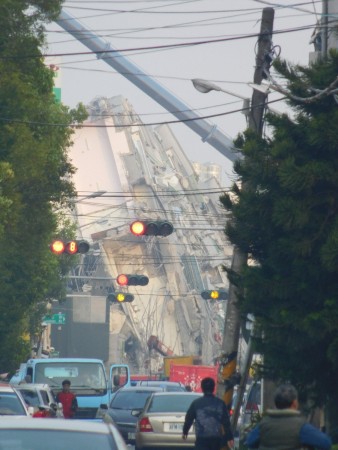
The 4:00am Kaohsiung 6.4 was indeed scary to locals at the many wreckage sites. But it was scarier for older structures, including political and economic. A strange selection of buildings fell while most were unharmed. Dishonesty is under investigation by no less than four prosecutors. And Taiwan’s spirit is stronger than it ever has been, something Beijing has never stared more clearly in the eye.

Controversial as TPP is, and as likely as it will be altered, it nails a big “No China Allowed” sign on the tree fort. With Taiwan proving its own, investigating bad dealings likely to implicate Mainland cronyism, further weakening the lame duck Nationalists even further… Even Obama’s “never let a good crisis go to waste” policy must be reviewed. Strength in the Pacific is forcing strength on the rim. The conflict is turning the tide.

continue reading

Standard
Stories

Earthquake in Taiwan

Deatroyed building at end of streetSaturday morning I awoke at 4:00 am to my apartment shaking. I had a feeling nothing would fall. So, I went back to sleep. I was right, about my own apartment, that was. In fact, I was right about most people who also had woken up.

Honestly, and I’m somewhat ashamed to confess, though it is the truth, I enjoy being in earthquakes. I don’t like them. I get a thrill being in them. I don’t like what they do to people. I certainly don’t like their destruction nor the massive dust storms that follow the buildings they topple. But I have been through enough that I know when I am not in danger; and I secretly kind of enjoy them once I know that. They bring a thrill. Perhaps this is my way of dealing with forces beyond my control. The thrill is an ugly reality about earthquakes.

The problem is, while it was fun for me in the moment, I knew it would not be for everyone.  · · · →

continue reading
Standard