OPINION: Assumptions kill relationships.
It's
really rude to assume I know what someone else is thinking or feeling,
unless they’ve already told me what they’re thinking or feeling. Or
you.
I’d say go so far as to say that it’s disempowering them,
and it diminishes their right to be in charge of their own thoughts and
feelings.
And “But I know them well” is not actually a good
excuse. If I know someone well (for example, I’ve known my bride for
many decades), I may have a better guess, a less-ignorant assumption,
but I’m still taking away their agency, damaging their responsibility
for their own heart. I’ve made that mistake enough times to be gun-shy.
(She has paid dearly for my assumptions over the years.)
Assumptions damage and can kill relationships, sometimes slowly and painfully, other times quickly and messily.
I
watch folks pretty regularly make an assumption about someone else,
then relate to them, or discuss them, as if those uninformed (or
misinformed) assumptions were actually true. The assumptions prevent us
from learning what is actually true about that person, and in
conversation, they prejudice other people’s thoughts and expectations
about them.
I was part of a social experiment one time. Six or
eight of us were assigned to the task of figuring out the answer to a
pretty complex problem. But as we worked on it, the researcher stuck
labels (like “prideful” or “wise one” or “hair-brained”) on our
foreheads and instructed us to assume that this is who each person
really was as we worked on our problem.
The exercise continued
for another 10 or 15 minutes. The curious thing was that at the end of
the exercise, we all knew what the label on our foreheads said, and we
had all begun to live up to (or down to) those assumptions.
Lesson:
in a relationship, my assumptions about you will help to shape who you
are and how you relate to me and to others around you.
On the
other hand, if I’m making assumptions about a public figure I’ll never
have an actual relationship with, for example Taylor Swift or Donald
Trump, then there’s no actual relationship to damage. But our
assumptions still prevent us from understanding what’s actually true. If
I believe that Taylor Swift is this way, then that’s what I’ll see,
that’s what I’ll expect from her. More dangerously, that’s also going to
shape (to limit) how I pray for her. Same with Donald Trump, or any
other person I might pray for. (And I always recommend praying for both
thought-leaders and political leaders.)
Personally, I’m working
on (and I confess I have a long way to go) replacing assumptions with
possibilities. I’m trying to eliminate “They think this” with “I allow
for the possibility that they might think this,” and then ask enough
questions to find out. Provided I really want to (and deserve to) know
what they think. It seems to me that people made in the image of God are
deserving of that level of respect.
Tag Archives: Integrity
Adversity as a Test
“So, as the Holy Spirit says: “Today, if you hear his voice, do not harden your hearts as you did in the rebellion, during the time of testing in the wilderness.”
I’m drawn to the phrase “the time of testing in the wilderness.” When was that time of testing he’s referring to, anyway?
The first time the word appears in Exodus is shortly after the people escaped Egypt into the wilderness:
“When they came to Marah, they could not drink its water because it was bitter. (That is why the place is called Marah.) So the people grumbled against Moses, saying, "What are we to drink?" Then Moses cried out to the LORD, and the LORD showed him a piece of wood. He threw it into the water, and the water became fit to drink. There the LORD issued a ruling and instruction for them and put them to the test."”
[Exodus 15:23-25]
The people needed something, and what they found on their own was not suitable to meet their need, so rather than ask God (or his designated leader at the time), they complained.
God calls it a test. It was a pattern they continued all the way from Egypt to the promised land: they had a need, so they whined, but God came through.
It occurs to me that the whiney people, freshly delivered from slavery, didn’t recognize the tests. I understand why they didn’t recognize the first one: they’d never been tested by God before.
But it happened over and over and over. Every time they had a need, they could have looked to God who had already met every single need they had for escaping slavery and surviving in the wilderness, but they focused their attention on their needs instead. And they whined.

I admire God’s patience as the whiny people tested his patience. (Yes, Scripture is clear: they tested him, too.)
Then I realized that when I am faced with a need, that’s probably a test, too.
If God is my provider, he’s going to provide for my needs.
(Note that not every want qualifies as a need. God has not promised to provide for everything I want, just for my needs. I may need to discern the difference.)
So every time I encounter a need in my life, I’m faced with the same choice: do I use this as an opportunity to bring my need to my Father, which keeps my heart soft toward him?
Or do I look at my need, focus on my need, whine about my need, and harden my heart toward my Father who loves me, and who is using this as an opportunity for softening my heart?
The Vengeance of God
Kindness Leads to Repentance
I was helping someone with a legal issue. This someone important to me, someone who calls me “dad.” And the legal issue was pretty bad. It wasn’t that he had done anything illegal, but he’d gotten involved with a World Class Pain-In-The-Hindquarters. So I prayed quite a bit; I prayed blessing on this man, on his business, on his real estate holdings. But wait, there's more!
It's kindness that leads to repentance. It really is.
Kindness Leads to Repentance
I was helping someone with a legal issue. This someone important to me, someone who calls me “dad.” And the legal issue was pretty bad. It wasn’t that he had done anything illegal, but he’d gotten involved with a World Class Pain-In-The-Hindquarters. So I prayed quite a bit; I prayed blessing on this man, on his business, on his real estate holdings. But wait, there's more!
It's kindness that leads to repentance. It really is.
Some Ways the Enemy Opposes God’s Kids
As I was reflecting on these, I felt Father’s sadness. “These are manifestations of the influence of an antichrist spirit,” he murmured softly. I realized, that’s certainly not saying, “They’re the Antichrist!” or even “They’re possessed.”
I'm working on keeping my message true. Your prayers - and your company - are invited.
Some Ways the Enemy Opposes God’s Kids
As I was reflecting on these, I felt Father’s sadness. “These are manifestations of the influence of an antichrist spirit,” he murmured softly. I realized, that’s certainly not saying, “They’re the Antichrist!” or even “They’re possessed.”
I’m working on keeping my message true. Your prayers – and your company – are invited.
Some Ways the Enemy Opposes God’s Kids
As I was reflecting on these, I felt Father’s sadness. “These are manifestations of the influence of an antichrist spirit,” he murmured softly. I realized, that’s certainly not saying, “They’re the Antichrist!” or even “They’re possessed.”
I'm working on keeping my message true. Your prayers - and your company - are invited.
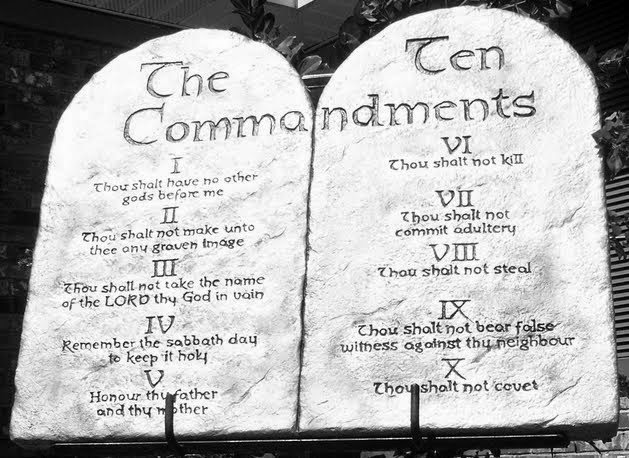
The First Commandment is a Threat.
Responding to “Melchizedek Means You Must Tithe!”
Does Abraham’s tithe to Melchizedek mean we must tithe?
Killing Terrorists?
I admit: the murderous persecution of Christians in the Middle East is an ugly thing. I’ve seen photos that make me want to throw up, and I’ve heard stories that make me want to send an army to the Middle East to bomb them back to the stone age.
I’ve been talking to other believers who have been arguing in favor of responding to terrorist violence with a violent (eg military) response. I understand that there are good and responsible arguments that can be made for using force against terrorism.
I’m not saying we should or shouldn’t. I suspect that there are good arguments on both sides of that conversation. I am fortunate in that I don’t need to have the answer to that particular question.
However, I’ve been observing that when the Church faced its first terrorist, God didn’t kill the terrorist. In fact, that terrorist, a maniacal Pharisee named Saul, became the apostle Paul, the greatest evangelist for the Kingdom of God in the history of the planet.
I’m not saying, “use force” or “don’t use force” against terrorists.
But I think I’m ready to say, Whatever you do, pray for their conversion. Pray for a Damascus Road experience for whichever terrorist group has your attention right now.
If it is true (and it is) that “The blood of the martyrs is the seed of the Church,” then there is going to be a revival of epic proportions in several places in the Earth as soon as those seeds hatch.
We’ll need passionate people to lead it, and we’ll need more of them than we have now.
Shoot them or don’t shoot them, as your conscience leads you. But for Heaven’s sake, do pray for them. Pray for their conversion. Pray that they meet the God of the Universe. And pray that he uses them in His Kingdom, like he used Paul.
That’s a response to terrorism with a good track record.
—
The Commandments of Christ
I’ve heard John 14:15 quoted many times in reference to obeying some of the laws of the Old Testament: “If you love Me, keep My commandments.” Or they’ve quoted John, 15:14 “You are my friends if you do what I command.”
The verse is thrown out as a prooftext: “You have to follow the commands of God!” though nobody’s expected to follow all the commands: they don’t promote blood sacrifices or stoning sinners. It’s just an attempt to coerce believers into submitting to their own favorite part of the Law.
This is an attempt at control: whether from ignorance or malevolence, this is an attempt to wield the Law, as it has always been wielded, to exercise control over you: “You must do what I say you must do, because of this verse!” This is part of “the curse of the Law.” And implicit in it is “If you don’t do what I say, you’re guilty!” and this is the rest of “the curse of the Law.”
Let’s look a little closer, shall we, at what Jesus said? Jesus doesn’t say, “If you love me, keep all the commands of the Law,” or even “If you love me, keep this particular group of the Law’s commands.”
What does he say? “Keep MY commandments.” Keep the commandments that Jesus has given. Not the commandments of the Law: the commandments of Jesus!
What did Jesus command? Let’s pull out a concordance and look, shall we?
Jhn 13:34
A new command I give you: Love one another. As I have loved you, so you must love one another.
Jhn 15:12
My command is this: Love each other as I have loved you.
Jhn 15:17
This is my command: Love each other.
You’re welcome to look it up yourself (http://nwp.link/1HpK278); these are actually the only commandments that Jesus gave. It’s pretty clear that, while he has commanded it several times, he only gave one command: love each other.
So yeah: if you love Jesus, keep the commandments he gave: they’re all about love each other. That’s it. This isn’t about obeying the law, or about religious traditions, or about dietary requirements or even a command to “do good works.”
It’s about loving each other.
It probably is appropriate to point out that love – true ἀγαπάω love – is a pretty big topic. It’s all about pursuing their good over your own good, and that’s a costly love that will itself require much of us. But the command is love; the command is not about submitting to the Law, either the Old Covenant Law, or the rules that someone is trying to control you with.
Brothers and sisters, the Law is dead. Long live the command of love.