Devotionals, Letters

The Fighter’s Regrets

Have you ever woken up with a song floating through the fog in your mind? Sometimes I think that’s just an echo of a dream or a memory, particularly if it’s a song I’ve heard or sung recently.

How about a song from your ancient history in your mind as you woke? I actually pay more attention to these; there’s less chance that it’s just my subconscious expressing itself.

I’d like to share one of these with you. You may find the process interesting, but I believe the lesson might apply to several of us.

Recently, I woke up with a song from my youth playing in my mind, and trust me, that’s from a long time ago. The song had nothing to do with the dream as far as I could tell, and I could only remember snippets of it – really only one phrase.

But that phrase kept replaying in my mind: that caught my attention. And as it replayed, my memory of the lyrics grew. This also suggested to me that this might be from God. So I spoke with Father about it, acknowledging that I thought he might be up to something; I asked for insight, and I paid attention as the memory of the song replayed and expanded in my mind.


Some themes began to stand out in the lyrics that kept playing in my memory. One of them definitely seemed to have the fragrance of my Father about it, so I meditated on that one. That is, I thought about it; I let it roll around in my mind to see what might come from it.

When my mind began to warm up (you know, I really appreciate the fact that God invented coffee!), I fired up Google and looked into it a bit more. And I realized that even after my memory had been playing it back for an hour or two, I had remembered only one verse out of five; the rest hadn’t come back to me, though those verses had actually been more important to me when the song was new.

Here’s the song: https://youtu.be/MYPJOCxSUFc. It’s called The Boxer, by Simon & Garfunkel. It was the last verse alone that spoke to me through the morning fog:

In the clearing stands a boxer
And a fighter by his trade
And he carries the reminders
Of every glove that laid him down
And cut him till he cried out
In his anger and his shame
“I am leaving, I am leaving”
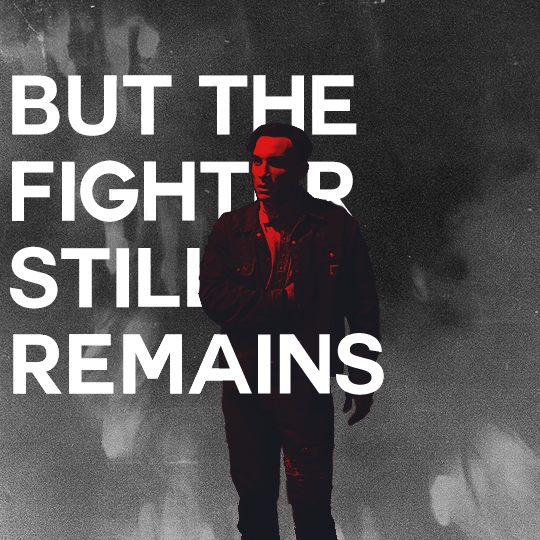
But the fighter still remains*

This verse had literally never made sense to me, but suddenly, there was a message in it for me.

It speaks to me, but I’d like to share it with you, because I suspect it might speak to other, too, and maybe that includes you.

I confess: I’m a man of fairly strong conviction. I stand up for those convictions, and it’s not inappropriate to say that I fight to maintain them. If I believe something to be true, I’ll fight to defend it.

Father gently pointed out that I, too, carry reminders of those fights, reminders, I suppose, every glove that laid me down or cut me till I cried out. I’ve paid a price to defend my convictions. Like the fighter in the song, the price has been paid in several areas of my life: in my memories, in my body carrying the stress, in the solitude that comes from having lost relationships.

Then he drew my attention to the fighter’s vow, and that I’ve made vows like that as well: “I am leaving, I am leaving” but I don’t leave. I remain. I still defend my beliefs, my convictions, and I’m still laid down and cut up sometimes. I’m still wounded from the fights that I am convinced are right and good. And they still bring the fruits of “anger and shame” into my life, just like they did in his.

(Didn’t someone say “You shall know them by their fruit”?  Hmmm....)

This is something that’s come partly from my character (I believe that standing up for “what is true” is important), partly from my youth (I was taught that truth is important and should be stood up for).

But this fight may have been fanned into the biggest flame from my years in Bible-believing churches. “This is what I believe to be true, so I must defend it at all costs.” We teach that, we believe that, in many evangelical churches, and while we defend different truths in denominational churches, we still defend them vigorously.

Think about how Christians respond when a movie comes that we don’t like out (remember Russell Crowe’s Noah?). Consider how Christians respond to “The Homosexual Agenda” or to political candidates, or to the abortion issue.

We’re taught to fight. And we do fight. Vigorously.

And let’s be honest. We don’t win these fights. Hollywood’s marketing now counts on “Christian outrage” as a publicity tool for their controversial movies, and they’re always right. Christians have not affected “The Homosexual Agenda” that we’ve stood against, abortion is still a very big business, and we’ve never once had an Evangelical believer in the Whitehouse, despite our fights on those issues.

The world knows: Christians are fighters. They don’t win, but they sure will fight. Behold how much they fight.

Father hasn’t been talking to me at this time about the issues in themselves. He’s only been using them to illustrate the fight, to illustrate the blows and the cuts that so many of us have taken in the fights.

Then he drew my attention to the refrain:

“Lie-la-lie. Lie-la-lie-lie-lie-lie-lie, Lie-la-lie
Lie-la-lie-lie-lie-lie-lie, lie-lie-lie-lie-lie.”*

Oh my. It’s right there. I’ve sung this haunting refrain with Paul Simon and Art Garfunkel, and I never saw it: there’s a lie here, and the refrain rubs my nose in it. That’s a lie, lie lie!

There’s perhaps some room for discussing what the lie is. The song itself identifies one:

“He cried out
In his anger and his shame
“I am leaving, I am leaving”
But the fighter still remains.”*

And I’ve done that. I’ve declared that I’m quitting this fight. But I haven’t really done it. I’ve lied. I’ve gotten tired of being beaten up, tired of the anger, tired of the shame, and I’ve tried to quit the fight. And I’ve failed.

As Father comforted me in this, I realized that for a fighter, the fight is a choice. It’s an option, but only one of several options. I don’t actually need to fight.

As he held me and murmured his love for me, I realized that these are not fights that have helped me, or have helped the Kingdom, not even a little bit.

I occasionally have “won” a fight, but what was the result? Maybe I could say I won, that I defeated someone who believed differently. So what? Now they’ve been defeated, now they’re wounded, too. And now they resent me, and worse they resent my message, and they resent the truth that I fought for.

You know, I don’t think anybody’s ever been bullied into receiving the truth, have they? Oh, sure, we’ve bullied people into actinglike they know the truth, but that’s just equipping them for hypocrisy. That’s not a win, not really, not for anybody.

For myself, I’m going to reflect on this for a while. I’m wondering if I might actually defend my beliefs better by walking them out than I would by fighting for them. I don’t know. I’ll think about it.

I may not need to be a fighter, alone in the clearing. I may not need to be laid down, cut open. I may not need to subject myself to the anger and shame.

The Kingdom is not about any of this, is it?

Lie la lie….

----

* From "The Boxer," by the American music duo Simon & Garfunkel from their fifth studio albumBridge over Troubled Water (1970) ©1969
Standard
Devotionals, Letters

The Fighter’s Regrets

Have you ever woken up with a song floating through the fog in your mind? Sometimes I think that’s just an echo of a dream or a memory, particularly if it’s a song I’ve heard or sung recently.

How about a song from your ancient history in your mind as you woke? I actually pay more attention to these; there’s less chance that it’s just my subconscious expressing itself.

I’d like to share one of these with you. You may find the process interesting, but I believe the lesson might apply to several of us.

Recently, I woke up with a song from my youth playing in my mind, and trust me, that’s from a long time ago. The song had nothing to do with the dream as far as I could tell, and I could only remember snippets of it – really only one phrase.

But that phrase kept replaying in my mind: that caught my attention. And as it replayed, my memory of the lyrics grew. This also suggested to me that this might be from God. So I spoke with Father about it, acknowledging that I thought he might be up to something; I asked for insight, and I paid attention as the memory of the song replayed and expanded in my mind.


Some themes began to stand out in the lyrics that kept playing in my memory. One of them definitely seemed to have the fragrance of my Father about it, so I meditated on that one. That is, I thought about it; I let it roll around in my mind to see what might come from it.

When my mind began to warm up (you know, I really appreciate the fact that God invented coffee!), I fired up Google and looked into it a bit more. And I realized that even after my memory had been playing it back for an hour or two, I had remembered only one verse out of five; the rest hadn’t come back to me, though those verses had actually been more important to me when the song was new.

Here’s the song: https://youtu.be/MYPJOCxSUFc. It’s called The Boxer, by Simon & Garfunkel. It was the last verse alone that spoke to me through the morning fog:

In the clearing stands a boxer
And a fighter by his trade
And he carries the reminders
Of every glove that laid him down
And cut him till he cried out
In his anger and his shame
“I am leaving, I am leaving”
But the fighter still remains*

This verse had literally never made sense to me, but suddenly, there was a message in it for me.

It speaks to me, but I’d like to share it with you, because I suspect it might speak to other, too, and maybe that includes you.

I confess: I’m a man of fairly strong conviction. I stand up for those convictions, and it’s not inappropriate to say that I fight to maintain them. If I believe something to be true, I’ll fight to defend it.

Father gently pointed out that I, too, carry reminders of those fights, reminders, I suppose, every glove that laid me down or cut me till I cried out. I’ve paid a price to defend my convictions. Like the fighter in the song, the price has been paid in several areas of my life: in my memories, in my body carrying the stress, in the solitude that comes from having lost relationships.

Then he drew my attention to the fighter’s vow, and that I’ve made vows like that as well: “I am leaving, I am leaving” but I don’t leave. I remain. I still defend my beliefs, my convictions, and I’m still laid down and cut up sometimes. I’m still wounded from the fights that I am convinced are right and good. And they still bring the fruits of “anger and shame” into my life, just like they did in his.

(Didn’t someone say “You shall know them by their fruit”?  Hmmm....)

This is something that’s come partly from my character (I believe that standing up for “what is true” is important), partly from my youth (I was taught that truth is important and should be stood up for).

But this fight may have been fanned into the biggest flame from my years in Bible-believing churches. “This is what I believe to be true, so I must defend it at all costs.” We teach that, we believe that, in many evangelical churches, and while we defend different truths in denominational churches, we still defend them vigorously.

Think about how Christians respond when a movie comes that we don’t like out (remember Russell Crowe’s Noah?). Consider how Christians respond to “The Homosexual Agenda” or to political candidates, or to the abortion issue.

We’re taught to fight. And we do fight. Vigorously.

And let’s be honest. We don’t win these fights. Hollywood’s marketing now counts on “Christian outrage” as a publicity tool for their controversial movies, and they’re always right. Christians have not affected “The Homosexual Agenda” that we’ve stood against, abortion is still a very big business, and we’ve never once had an Evangelical believer in the Whitehouse, despite our fights on those issues.

The world knows: Christians are fighters. They don’t win, but they sure will fight. Behold how much they fight.

Father hasn’t been talking to me at this time about the issues in themselves. He’s only been using them to illustrate the fight, to illustrate the blows and the cuts that so many of us have taken in the fights.

Then he drew my attention to the refrain:

“Lie-la-lie. Lie-la-lie-lie-lie-lie-lie, Lie-la-lie
Lie-la-lie-lie-lie-lie-lie, lie-lie-lie-lie-lie.”*

Oh my. It’s right there. I’ve sung this haunting refrain with Paul Simon and Art Garfunkel, and I never saw it: there’s a lie here, and the refrain rubs my nose in it. That’s a lie, lie lie!

There’s perhaps some room for discussing what the lie is. The song itself identifies one:

“He cried out
In his anger and his shame
“I am leaving, I am leaving”
But the fighter still remains.”*

And I’ve done that. I’ve declared that I’m quitting this fight. But I haven’t really done it. I’ve lied. I’ve gotten tired of being beaten up, tired of the anger, tired of the shame, and I’ve tried to quit the fight. And I’ve failed.

As Father comforted me in this, I realized that for a fighter, the fight is a choice. It’s an option, but only one of several options. I don’t actually need to fight.

As he held me and murmured his love for me, I realized that these are not fights that have helped me, or have helped the Kingdom, not even a little bit.

I occasionally have “won” a fight, but what was the result? Maybe I could say I won, that I defeated someone who believed differently. So what? Now they’ve been defeated, now they’re wounded, too. And now they resent me, and worse they resent my message, and they resent the truth that I fought for.

You know, I don’t think anybody’s ever been bullied into receiving the truth, have they? Oh, sure, we’ve bullied people into actinglike they know the truth, but that’s just equipping them for hypocrisy. That’s not a win, not really, not for anybody.

For myself, I’m going to reflect on this for a while. I’m wondering if I might actually defend my beliefs better by walking them out than I would by fighting for them. I don’t know. I’ll think about it.

I may not need to be a fighter, alone in the clearing. I may not need to be laid down, cut open. I may not need to subject myself to the anger and shame.

The Kingdom is not about any of this, is it?

Lie la lie….

----

* From "The Boxer," by the American music duo Simon & Garfunkel from their fifth studio albumBridge over Troubled Water (1970) ©1969
Standard
Prophecy

Maximize Your Strengths

We all have strengths. It’s more effective to make maximum use of our strengths rather than trying to turn weakness into strength.

There’s a line of thinking in the western education system that has also influenced the western church that says if we’re not good at something (say, math), then we need to develop our skills at math until it’s one of our strengths, which necessarily means we don’t work at our developing the areas that are already our strengths (say, writing), so they don’t develop so much.

We tend to think that it’s best to be a pastor or a teacher, because that’s what we see modeled. But if that isn’t you, then you have a choice: either try to fake it, or be who you really are, even if it’s something that isn’t as well recognized.

Exercise your strengths.

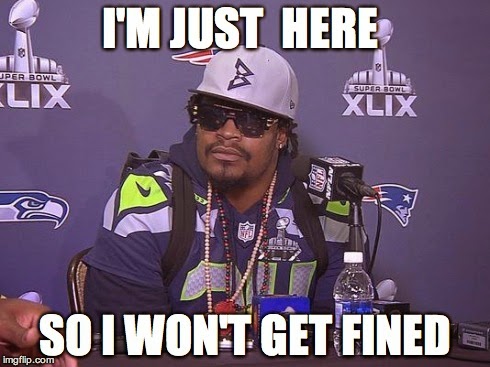
Consider the Seattle Seahawks. Applying that line thinking would teach us that quarterback Russell Wilson needs to learn how to block a blitz from 275 pound linebackers, that defensive corner Richard Sherman needs to learn to learn how to function as a quietly confident offensive lineman, or that “Beast Mode” Marshawn Lynch, the best running back in the league, needs to develop his public media and publicity skills, and stop focusing so much on running the football.

That’s pretty ridiculous, isn’t it?

What took the Seahawks to the Superbowl twice recently was each member recognizing that they have a gift that is different that others’ gifts, and each member developing their strength, and trusting others’ strengths in places where they are not strong.

You’ve seen how Marshawn treasures his offensive linemen? He buys them gifts, sometimes expensive gifts, because they do very well what he cannot, and it makes the way for him to do (very well!) what they cannot.

Yeah, that’s how it works. We don’t ignore the gifts we don’t have, but neither do we focus on them. It’s absolute foolishness to ignore the gift that God has given us in order to develop what someone thinks is a more important gift.

Don’t be a copycat.
It never works, anyway.

If the gift is from Holy Spirit, it’s as valuable as He is (that’s kind of a big deal). If the gift is from skill or practice or sheer determination, instead of from the Holy Spirit, then it qualifies as “wood, hay or stubble,” and it will make a nice bonfire in the day or reckoning.

I’ve got more important things to do than prepare for Heaven’s bonfire. So do you.

Use the gifts God has given you, even if you don’t know another soul with those gifts. Be you! God doesn’t need copycats.

Standard
Devotionals, Letters

Maximize Your Strengths

We all have strengths. It's more effective to make maximum use of our strengths rather than trying to turn weakness into strength.

There's a line of thinking in the western education system that has also influenced the western church that says if we're not good at something (say, math), then we need to develop our skills at math until it's one of our strengths, which necessarily means we don't work at our developing the areas that are already our strengths (say, writing), so they don't develop so much.

We tend to think that it’s best to be a pastor or a teacher, because that’s what we see modeled. But if that isn’t you, then you have a choice: either try to fake it, or be who you really are, even if it’s something that isn’t as well recognized.

Exercise your strengths.
Consider the Seattle Seahawks. Applying that line thinking would teach us that quarterback Russell Wilson needs to learn how to block a blitz from 275 pound linebackers, that defensive corner Richard Sherman needs to learn to learn how to function as a quietly confident offensive lineman, or that “Beast Mode” Marshawn Lynch, the best running back in the league, needs to develop his public media and publicity skills, and stop focusing so much on running the football.

That’s pretty ridiculous, isn’t it?

What took the Seahawks to the Superbowl twice recently was each member recognizing that they have a gift that is different that others' gifts, and each member developing their strength, and trusting others' strengths in places where they are not strong.

You've seen how Marshawn treasures his offensive linemen? He buys them gifts, sometimes expensive gifts, because they do very well what he cannot, and it makes the way for him to do (very well!) what they cannot.

Yeah, that's how it works. We don’t ignore the gifts we don’t have, but neither do we focus on them. It’s absolute foolishness to ignore the gift that God has given us in order to develop what someone thinks is a more important gift.

Don't be a copycat.
It never works, anyway.
If the gift is from Holy Spirit, it’s as valuable as He is (that’s kind of a big deal). If the gift is from skill or practice or sheer determination, instead of from the Holy Spirit, then it qualifies as “wood, hay or stubble,” and it will make a nice bonfire in the day or reckoning.

I’ve got more important things to do than prepare for Heaven’s bonfire. So do you.

Use the gifts God has given you, even if you don’t know another soul with those gifts. Be you! God doesn’t need copycats.

Standard
Devotionals, Letters

Maximize Your Strengths

We all have strengths. It's more effective to make maximum use of our strengths rather than trying to turn weakness into strength.

There's a line of thinking in the western education system that has also influenced the western church that says if we're not good at something (say, math), then we need to develop our skills at math until it's one of our strengths, which necessarily means we don't work at our developing the areas that are already our strengths (say, writing), so they don't develop so much.

We tend to think that it’s best to be a pastor or a teacher, because that’s what we see modeled. But if that isn’t you, then you have a choice: either try to fake it, or be who you really are, even if it’s something that isn’t as well recognized.

Exercise your strengths.
Consider the Seattle Seahawks. Applying that line thinking would teach us that quarterback Russell Wilson needs to learn how to block a blitz from 275 pound linebackers, that defensive corner Richard Sherman needs to learn to learn how to function as a quietly confident offensive lineman, or that “Beast Mode” Marshawn Lynch, the best running back in the league, needs to develop his public media and publicity skills, and stop focusing so much on running the football.

That’s pretty ridiculous, isn’t it?

What took the Seahawks to the Superbowl twice recently was each member recognizing that they have a gift that is different that others' gifts, and each member developing their strength, and trusting others' strengths in places where they are not strong.

You've seen how Marshawn treasures his offensive linemen? He buys them gifts, sometimes expensive gifts, because they do very well what he cannot, and it makes the way for him to do (very well!) what they cannot.

Yeah, that's how it works. We don’t ignore the gifts we don’t have, but neither do we focus on them. It’s absolute foolishness to ignore the gift that God has given us in order to develop what someone thinks is a more important gift.

Don't be a copycat.
It never works, anyway.
If the gift is from Holy Spirit, it’s as valuable as He is (that’s kind of a big deal). If the gift is from skill or practice or sheer determination, instead of from the Holy Spirit, then it qualifies as “wood, hay or stubble,” and it will make a nice bonfire in the day or reckoning.

I’ve got more important things to do than prepare for Heaven’s bonfire. So do you.

Use the gifts God has given you, even if you don’t know another soul with those gifts. Be you! God doesn’t need copycats.

Standard
Prophecy

Mid Course Corrections Going On

If you’re an observer of the church, you’ll notice something interesting: God is leading the emerging generation of believers differently than the path the generation that’s finishing their race ran on.

Even now, if you ask about priorities for the people of God, believers in the “over 40” age group will talk about theology, and the need to have all the theology right. This group talks about the Bible as the authority, though they often live as though the Sunday sermon is the real authority. (Note: “over 40” is just an approximation: some 30-year-olds belong in this group, and some 60-year-olds belong in the other.)

But if you ask believers in the “under 40” age group the same question, they won’t mention theology. This group is more focused on “How can I change the world?” and they expect to refine their theology along the way. This group also regards the Bible highly; the Bible, interpreted by the Holy Spirit, not by the pastor’s sermon, is the real authority.

The curious thing is that the second group, rather than the first is actually more Biblical: this is the model used over and over in the Book of Acts: “He said preach the good news to the whole world! Let’s go preach somewhere that nobody else has preached yet.” In fact, it has been said that Apostle Paul’s method of being led by God was something of “bumbling around in the Spirit until something happened!”

Regardless of which group you find yourself in (I think of them as the “Get The Theology Right” group and the “Change the World” group), this is not suggesting to you that theology is not important. It is of critical importance. But theology is not more important – or more urgent – than obeying the Word.

As I’ve been reflecting on this, I realize that, being in the older age bracket, I’ve been assuming that the theological questions have been the right questions to ask. I’m changing that opinion.

Curiously, when given instructions by God to go do something (such as “Go into all the world and preach the good news of the gospel”), it is the servants who insist on getting the instructions exactly right. The response of sons of the Kingdom is more along the lines of “Hey, good idea. Grab the debit card and let’s go!”

Since many of us in the older group, who have valued theology so much, are finally understanding so much more about our status as sons, not as servants, and since we’re teaching the younger believers that they’re sons, not servants, I suppose we should not be surprised that they’re making the choices that sons make, rather than making the choices that servants make, as my generation has done (much to our embarrassment).

As I’m learning more about my identity as a son, not a servant (why did nobody tell me this decades ago???), I’m coming to value the perspective of the second group more. I admire their willingness to take risks, I admire their eagerness to follow God’s leadership, and I admire how much they’re getting done!
  
I’m going to think more carefully about how to continue my ministry before the Lord.


From NorthwestProphetic: http://www.pilgrimgram.com/2015/07/mid-course-correction-going-on.html


Standard
Prophecy

Mid Course Corrections Going On

If you’re an observer of the church, you’ll notice something interesting: God is leading the emerging generation of believers differently than the path the generation that’s finishing their race ran on.

Even now, if you ask about priorities for the people of God, believers in the “over 40” age group will talk about theology, and the need to have all the theology right. This group talks about the Bible as the authority, though they often live as though the Sunday sermon is the real authority. (Note: “over 40” is just an approximation: some 30-year-olds belong in this group, and some 60-year-olds belong in the other.)

But if you ask believers in the “under 40” age group the same question, they won’t mention theology. This group is more focused on “How can I change the world?” and they expect to refine their theology along the way. This group also regards the Bible highly; the Bible, interpreted by the Holy Spirit, not by the pastor’s sermon, is the real authority.

The curious thing is that the second group, rather than the first is actually more Biblical: this is the model used over and over in the Book of Acts: “He said preach the good news to the whole world! Let’s go preach somewhere that nobody else has preached yet.” In fact, it has been said that Apostle Paul’s method of being led by God was something of “bumbling around in the Spirit until something happened!”

Regardless of which group you find yourself in (I think of them as the “Get The Theology Right” group and the “Change the World” group), this is not suggesting to you that theology is not important. It is of critical importance. But theology is not more important – or more urgent – than obeying the Word.

As I’ve been reflecting on this, I realize that, being in the older age bracket, I’ve been assuming that the theological questions have been the right questions to ask. I’m changing that opinion.

Curiously, when given instructions by God to go do something (such as “Go into all the world and preach the good news of the gospel”), it is the servants who insist on getting the instructions exactly right. The response of sons of the Kingdom is more along the lines of “Hey, good idea. Grab the debit card and let’s go!”

Since many of us in the older group, who have valued theology so much, are finally understanding so much more about our status as sons, not as servants, and since we’re teaching the younger believers that they’re sons, not servants, I suppose we should not be surprised that they’re making the choices that sons make, rather than making the choices that servants make, as my generation has done (much to our embarrassment).

As I’m learning more about my identity as a son, not a servant (why did nobody tell me this decades ago???), I’m coming to value the perspective of the second group more. I admire their willingness to take risks, I admire their eagerness to follow God’s leadership, and I admire how much they’re getting done!
  
I’m going to think more carefully about how to continue my ministry before the Lord.


From NorthwestProphetic: http://www.pilgrimgram.com/2015/07/mid-course-correction-going-on.html


Standard
Prophecy

Mid Course Corrections Going On

If you’re an observer of the church, you’ll notice something interesting: God is leading the emerging generation of believers differently than the path the generation that’s finishing their race ran on.

Even now, if you ask about priorities for the people of God, believers in the “over 40” age group will talk about theology, and the need to have all the theology right. This group talks about the Bible as the authority, though they often live as though the Sunday sermon is the real authority. (Note: “over 40” is just an approximation: some 30-year-olds belong in this group, and some 60-year-olds belong in the other.)

But if you ask believers in the “under 40” age group the same question, they won’t mention theology. This group is more focused on “How can I change the world?” and they expect to refine their theology along the way. This group also regards the Bible highly; the Bible, interpreted by the Holy Spirit, not by the pastor’s sermon, is the real authority.

The curious thing is that the second group, rather than the first is actually more Biblical: this is the model used over and over in the Book of Acts: “He said preach the good news to the whole world! Let’s go preach somewhere that nobody else has preached yet.” In fact, it has been said that Apostle Paul’s method of being led by God was something of “bumbling around in the Spirit until something happened!”

Regardless of which group you find yourself in (I think of them as the “Get The Theology Right” group and the “Change the World” group), this is not suggesting to you that theology is not important. It is of critical importance. But theology is not more important – or more urgent – than obeying the Word.

As I’ve been reflecting on this, I realize that, being in the older age bracket, I’ve been assuming that the theological questions have been the right questions to ask. I’m changing that opinion.

Curiously, when given instructions by God to go do something (such as “Go into all the world and preach the good news of the gospel”), it is the servants who insist on getting the instructions exactly right. The response of sons of the Kingdom is more along the lines of “Hey, good idea. Grab the debit card and let’s go!”

Since many of us in the older group, who have valued theology so much, are finally understanding so much more about our status as sons, not as servants, and since we’re teaching the younger believers that they’re sons, not servants, I suppose we should not be surprised that they’re making the choices that sons make, rather than making the choices that servants make, as my generation has done (much to our embarrassment).

As I’m learning more about my identity as a son, not a servant (why did nobody tell me this decades ago???), I’m coming to value the perspective of the second group more. I admire their willingness to take risks, I admire their eagerness to follow God’s leadership, and I admire how much they’re getting done!
  
I’m going to think more carefully about how to continue my ministry before the Lord.


From NorthwestProphetic: http://www.pilgrimgram.com/2015/07/mid-course-correction-going-on.html


Standard
Prophecy

Outraged at Outrage

Our world, and especially our media, are obsessed with outrage. If we are outraged, others pay attention to us and join in the outrage. We feel empowered when we are outraged, like we are making a difference. We are deceived.
We all know what outrage is. Outrage is defined as “an extremely strong reaction of anger, shock, or indignation.”
Let’s be outraged by the death of a wild animal. Let’s be outraged at the loss of our constitution. Let’s be outraged about killing babies and selling their body parts to the highest bidder.
And the silliest of them all: Let’s be outraged that people aren’t outraged by what gets me outraged.
With the obvious exception of the last one, most current targets for outrage are legitimate issues, legitimate problems. And they deserve legitimate solutions. They deserve change.
The problem that I have with outrage is that it betrays us. Outrage lies to us.
First, outrage betrays us by pretending to be an appropriate response. It convinces us somehow it is socially conscious to feel powerful emotions, to shout at others with those powerful and controlling emotions, and to post snarky statements and memes online. And if I manage to get others to join me in my powerful emotions and snarky online posts, I’ve improved the world. That’s not actually change, is it?
Outrage betrays us by substituting bitter words and indignant feelings for actual action. I’m not saying the feelings are inappropriate or that strong feelings are an error. I will say that if the words are focused on finding fault or pointing out foolishness, that yes, I do consider that to be inappropriate.
But the reality is that as satisfying as those emotions and those witty memes are, they don’t change anything. There will be people who kill animals, people who abrogate constitutional rights, and people who kill babies in order to sell their body parts for profit. My powerful emotions won’t change that.
Outrage also betrays us, because it’s a tool being used to manipulate us. Talk show hosts and producers intentionally manipulate their content in order to entice outrage in their audience, so that they’ll remain a loyal and participative audience. Advertisers use outrage to sell you their products. Political groups use outrage to persuade you to fund their groups, but even more, they use outrage to direct your attention away from the things that they don’t want you to see. It’s this last one that really irritates me.
Yes, it is legitimately sad that a lion was killed somewhere in Africa. It’s sadder that the hunter who killed him is the target of so much hatred that his life, his family and his business have been destroyed. Personally, I find it saddest of all that more people get more upset about a dead animal than about the murdering-babies-and-selling-their-body-parts industry. I don’t think they deserve the same attention.
But that’s the success of outrage: there are people who support the business of killing babies, and they don’t want to be the focus of this much media attention, because then their secret might get out and their billions of dollars of income might be reduced a little. So let’s focus everybody’s outrage on an animal that was literally on the other side of the planet, in a nation that none of us has ever visited, and that was hunted and killed legally (at least by local law), and let’s get everybody to focus on that dead cat so they’ll stop asking questions about our profitable baby-murdering business.
And it’s working, isn’t it? (And it’s working so well that I’ll bet I get people outraged over the lion who defend their outrage in the comments.)
I’m really tired of outrage. I’m tired of being emotionally wound up. I’m tired of being manipulated by the purveyors of outrage. I’m tired of having others tell me what I should feel strongly about. I’m tired of reading snarky and self-serving accusations and character assassinations of people who think differently than we think they should. I’m tired of having complex issues reduced to black-and-white caricatures so that they produce increased outrage.
Forgive me, but I won’t be participating in any outrage this week. Please don’t be offended that I won’t be joining you in yours.
“So what could we do instead of willingly volunteering to be emotionally manipulated? Is there an alternative?” I’m so glad you asked. Yes, there are a number of responses to things-that-are-wrong other than mere outrage.
The most important first step, I suppose, is to decide which issues are worth your attention. Don’t let the news media or social media tell you what you should care about. You decide. Cheat if you want: its OK to pray about this decision. It’s an important one, partly because this decision is the beginning of you taking the control of your emotional responses away from those who have delighted in controlling your emotions for you.
Second, I recommend sorting your emotions out. What are you actually feeling, and why does this issue trigger those emotions? Which emotions are actually yours, and which have been sold to you by others? And listen to the emotions: what are they suggesting needs to be done?  I’m not saying “don’t feel emotions.” I am, however, saying “don’t stop with feeling emotions.”
I recommend asking the question, “Is this actually any of my business?” If it isn’t, then this isn’t the place for you to get involved, except perhaps by prayer. And some will argue that our prayer might be less effective in causes that are none of our business. But that’s none of my business, so I’ll move on.
And once you’ve decided that there is an issue worthy of your attention, then take action. Here I’d argue that prayer is an excellent first action to take, and that may be the extent of your action regarding this issue. If you go no further than to pray, then you can at least know that you’ve freed yourself from being manipulated by others for their own, possibly nefarious purposes, and you’ve brought God’s attention to the matter. That’s not insignificant at all.
And further action may be appropriate after you’ve prayed. I recommend considering where your greatest influence lies (Consider which of the Seven Mountains your influence reaches the most) and take action in that arena. But take thoughtful action, don’t just write or shout outraged words: leaders of industry, government, culture know that outraged words are meaningless, and they are generally ignored, if they don’t respond with attempts to further manipulate us with outrage.
This is my attempt to respond in a method other than outrage to what appears to me to be an outrageous error in our culture. This is my attempt to bring some attention to the actual problem (the futility of being emotionally manipulated by people who don’t have your best interest in their minds) and to offer an alternative (choose what to be moved by, and how to move in response).
So now it’s your choice. You can be outraged at my suggestions. Or you can actually make a difference. It’s up to you.

Standard
Devotionals, Letters

Outraged at Outrage

Our world, and especially our media, are obsessed with outrage. If we are outraged, others pay attention to us and join in the outrage. We feel empowered when we are outraged, like we are making a difference. We are deceived.

We all know what outrage is. Outrage is defined as “an extremely strong reaction of anger, shock, or indignation.”

Let's be outraged by the death of a wild animal. Let’s be outraged at the loss of our constitution. Let's be outraged about killing babies and selling their body parts to the highest bidder.

And the silliest of them all: Let's be outraged that people aren't outraged by what gets me outraged.

With the obvious exception of the last one, most current targets for outrage are legitimate issues, legitimate problems. And they deserve legitimate solutions. They deserve change.

The problem that I have with outrage is that it betrays us. Outrage lies to us.

First, outrage betrays us by pretending to be an appropriate response. It convinces us somehow it is socially conscious to feel powerful emotions, to shout at others with those powerful and controlling emotions, and to post snarky statements and memes online. And if I manage to get others to join me in my powerful emotions and snarky online posts, I’ve improved the world. That’s not actually change, is it?

Outrage betrays us by substituting bitter words and indignant feelings for actual action. I’m not saying the feelings are inappropriate or that strong feelings are an error. I will say that if the words are focused on finding fault or pointing out foolishness, that yes, I do consider that to be inappropriate.

But the reality is that as satisfying as those emotions and those witty memes are, they don’t change anything. There will be people who kill animals, people who abrogate constitutional rights, and people who kill babies in order to sell their body parts for profit. My powerful emotions won’t change that.

Outrage also betrays us, because it’s a tool being used to manipulate us. Talk show hosts and producers intentionally manipulate their content in order to entice outrage in their audience, so that they’ll remain a loyal and participative audience. Advertisers use outrage to sell you their products. Political groups use outrage to persuade you to fund their groups, but even more, they use outrage to direct your attention away from the things that they don’t want you to see. It’s this last one that really irritates me.

Yes, it is legitimately sad that a lion was killed somewhere in Africa. It’s sadder that the hunter who killed him is the target of so much hatred that his life, his family and his business have been destroyed. Personally, I find it saddest of all that more people get more upset about a dead animal than about the murdering-babies-and-selling-their-body-parts industry. I don’t think they deserve the same attention.

But that’s the success of outrage: there are people who support the business of killing babies, and they don’t want to be the focus of this much media attention, because then their secret might get out and their billions of dollars of income might be reduced a little. So let’s focus everybody’s outrage on an animal that was literally on the other side of the planet, in a nation that none of us has ever visited, and that was hunted and killed legally (at least by local law), and let’s get everybody to focus on that dead cat so they’ll stop asking questions about our profitable baby-murdering business.

And it’s working, isn’t it? (And it’s working so well that I’ll bet I get people outraged over the lion who defend their outrage in the comments.)

I'm really tired of outrage. I’m tired of being emotionally wound up. I’m tired of being manipulated by the purveyors of outrage. I’m tired of having others tell me what I should feel strongly about. I’m tired of reading snarky and self-serving accusations and character assassinations of people who think differently than we think they should. I’m tired of having complex issues reduced to black-and-white caricatures so that they produce increased outrage.

Forgive me, but I won't be participating in any outrage this week. Please don't be offended that I won’t be joining you in yours.

“So what could we do instead of willingly volunteering to be emotionally manipulated? Is there an alternative?” I’m so glad you asked. Yes, there are a number of responses to things-that-are-wrong other than mere outrage.

The most important first step, I suppose, is to decide which issues are worth your attention. Don’t let the news media or social media tell you what you should care about. You decide. Cheat if you want: its OK to pray about this decision. It’s an important one, partly because this decision is the beginning of you taking the control of your emotional responses away from those who have delighted in controlling your emotions for you.

Second, I recommend sorting your emotions out. What are you actually feeling, and why does this issue trigger those emotions? Which emotions are actually yours, and which have been sold to you by others? And listen to the emotions: what are they suggesting needs to be done?  I’m not saying “don’t feel emotions.” I am, however, saying “don’t stop with feeling emotions.”

I recommend asking the question, “Is this actually any of my business?” If it isn’t, then this isn’t the place for you to get involved, except perhaps by prayer. And some will argue that our prayer might be less effective in causes that are none of our business. But that’s none of my business, so I’ll move on.

And once you’ve decided that there is an issue worthy of your attention, then take action. Here I’d argue that prayer is an excellent first action to take, and that may be the extent of your action regarding this issue. If you go no further than to pray, then you can at least know that you’ve freed yourself from being manipulated by others for their own, possibly nefarious purposes, and you’ve brought God’s attention to the matter. That’s not insignificant at all.

And further action may be appropriate after you’ve prayed. I recommend considering where your greatest influence lies (Consider which of the Seven Mountains your influence reaches the most) and take action in that arena. But take thoughtful action, don’t just write or shout outraged words: leaders of industry, government, culture know that outraged words are meaningless, and they are generally ignored, if they don’t respond with attempts to further manipulate us with outrage.

This is my attempt to respond in a method other than outrage to what appears to me to be an outrageous error in our culture. This is my attempt to bring some attention to the actual problem (the futility of being emotionally manipulated by people who don’t have your best interest in their minds) and to offer an alternative (choose what to be moved by, and how to move in response).

So now it’s your choice. You can be outraged at my suggestions. Or you can actually make a difference. It’s up to you.


Standard
Devotionals, Letters

Outraged at Outrage

Our world, and especially our media, are obsessed with outrage. If we are outraged, others pay attention to us and join in the outrage. We feel empowered when we are outraged, like we are making a difference. We are deceived.

We all know what outrage is. Outrage is defined as “an extremely strong reaction of anger, shock, or indignation.”

Let's be outraged by the death of a wild animal. Let’s be outraged at the loss of our constitution. Let's be outraged about killing babies and selling their body parts to the highest bidder.

And the silliest of them all: Let's be outraged that people aren't outraged by what gets me outraged.

With the obvious exception of the last one, most current targets for outrage are legitimate issues, legitimate problems. And they deserve legitimate solutions. They deserve change.

The problem that I have with outrage is that it betrays us. Outrage lies to us.

First, outrage betrays us by pretending to be an appropriate response. It convinces us somehow it is socially conscious to feel powerful emotions, to shout at others with those powerful and controlling emotions, and to post snarky statements and memes online. And if I manage to get others to join me in my powerful emotions and snarky online posts, I’ve improved the world. That’s not actually change, is it?

Outrage betrays us by substituting bitter words and indignant feelings for actual action. I’m not saying the feelings are inappropriate or that strong feelings are an error. I will say that if the words are focused on finding fault or pointing out foolishness, that yes, I do consider that to be inappropriate.

But the reality is that as satisfying as those emotions and those witty memes are, they don’t change anything. There will be people who kill animals, people who abrogate constitutional rights, and people who kill babies in order to sell their body parts for profit. My powerful emotions won’t change that.

Outrage also betrays us, because it’s a tool being used to manipulate us. Talk show hosts and producers intentionally manipulate their content in order to entice outrage in their audience, so that they’ll remain a loyal and participative audience. Advertisers use outrage to sell you their products. Political groups use outrage to persuade you to fund their groups, but even more, they use outrage to direct your attention away from the things that they don’t want you to see. It’s this last one that really irritates me.

Yes, it is legitimately sad that a lion was killed somewhere in Africa. It’s sadder that the hunter who killed him is the target of so much hatred that his life, his family and his business have been destroyed. Personally, I find it saddest of all that more people get more upset about a dead animal than about the murdering-babies-and-selling-their-body-parts industry. I don’t think they deserve the same attention.

But that’s the success of outrage: there are people who support the business of killing babies, and they don’t want to be the focus of this much media attention, because then their secret might get out and their billions of dollars of income might be reduced a little. So let’s focus everybody’s outrage on an animal that was literally on the other side of the planet, in a nation that none of us has ever visited, and that was hunted and killed legally (at least by local law), and let’s get everybody to focus on that dead cat so they’ll stop asking questions about our profitable baby-murdering business.

And it’s working, isn’t it? (And it’s working so well that I’ll bet I get people outraged over the lion who defend their outrage in the comments.)

I'm really tired of outrage. I’m tired of being emotionally wound up. I’m tired of being manipulated by the purveyors of outrage. I’m tired of having others tell me what I should feel strongly about. I’m tired of reading snarky and self-serving accusations and character assassinations of people who think differently than we think they should. I’m tired of having complex issues reduced to black-and-white caricatures so that they produce increased outrage.

Forgive me, but I won't be participating in any outrage this week. Please don't be offended that I won’t be joining you in yours.

“So what could we do instead of willingly volunteering to be emotionally manipulated? Is there an alternative?” I’m so glad you asked. Yes, there are a number of responses to things-that-are-wrong other than mere outrage.

The most important first step, I suppose, is to decide which issues are worth your attention. Don’t let the news media or social media tell you what you should care about. You decide. Cheat if you want: its OK to pray about this decision. It’s an important one, partly because this decision is the beginning of you taking the control of your emotional responses away from those who have delighted in controlling your emotions for you.

Second, I recommend sorting your emotions out. What are you actually feeling, and why does this issue trigger those emotions? Which emotions are actually yours, and which have been sold to you by others? And listen to the emotions: what are they suggesting needs to be done?  I’m not saying “don’t feel emotions.” I am, however, saying “don’t stop with feeling emotions.”

I recommend asking the question, “Is this actually any of my business?” If it isn’t, then this isn’t the place for you to get involved, except perhaps by prayer. And some will argue that our prayer might be less effective in causes that are none of our business. But that’s none of my business, so I’ll move on.

And once you’ve decided that there is an issue worthy of your attention, then take action. Here I’d argue that prayer is an excellent first action to take, and that may be the extent of your action regarding this issue. If you go no further than to pray, then you can at least know that you’ve freed yourself from being manipulated by others for their own, possibly nefarious purposes, and you’ve brought God’s attention to the matter. That’s not insignificant at all.

And further action may be appropriate after you’ve prayed. I recommend considering where your greatest influence lies (Consider which of the Seven Mountains your influence reaches the most) and take action in that arena. But take thoughtful action, don’t just write or shout outraged words: leaders of industry, government, culture know that outraged words are meaningless, and they are generally ignored, if they don’t respond with attempts to further manipulate us with outrage.

This is my attempt to respond in a method other than outrage to what appears to me to be an outrageous error in our culture. This is my attempt to bring some attention to the actual problem (the futility of being emotionally manipulated by people who don’t have your best interest in their minds) and to offer an alternative (choose what to be moved by, and how to move in response).

So now it’s your choice. You can be outraged at my suggestions. Or you can actually make a difference. It’s up to you.


Standard
Devotionals, Letters

A Dream and its Sequel

May I share with you my dream, and its sequel? I’ve never been a big one for dreaming, and until this dream, I’d never, until this dream, received instruction in a dream.

The first dream: Many of us were on a large wooden ship. It was the size of a supertanker, but it was wooden. I don't know where it was going, and I don't think I ever did learn.

Below deck, on a very large deck, was a smaller ship: not a boat, a ship. As my wife was away, talking with crew or passengers, I was below decks, preparing that ship.

There were two things that were both heavy that I was loading up on. One was crowbars: not a "j" shape crowbar, but more of a "t" shaped crowbar. I loaded about 20 or 30 of them onto the smaller ship. I don't remember the other.

It seemed that I broke out a wall or a deck of the big ship in order to get the smaller ship out, and my wife showed up about that time to go with me. I woke up before we launched the smaller ship.

I had the dream during the time that I was enrolled in a dream interpretation class, so I shared it with my friends in the class. They agreed: The large ship is the Sunday Morning church, and truthfully, I didn’t really know where that was going. My small ship below decks was a heads up: God was calling me out of the established church into something more personal. The crowbars were preparation for me to help others into similar freedom.

What these good people didn’t know was that God had been calling me to do something I hadn’t done in nearly 50 years in the faith: to disengage from my local congregation, and to take responsibility for our own spiritual life, apart from a larger congregation: to become “unchurched.” It scared the stuffing out of me, which may be part of why Father affirmed it in a dream.

----- Interlude -----

Eighteen months later, I had left the Sunday Morning community, and my head was still spinning; this was something I’d never done before, something that I had regularly taught against, that I had prayed against. In that confusing season, I had the sequel to the dream, a dream that picked up right after the point the dream had ended.


In that dream, I had succeeded at launching the small ship out of the hole in the port side of the big ship. I watched as the big ship steamed on, unaware of our departure. When the great ship was out of sight over the horizon, I realized four things:

1) I suddenly saw my surroundings, and I realized that the only things I could see were waves. I had no idea where in the vast ocean I had departed from the great ship. I didn’t know where I was. I had no bearings.

2) Those waves had appeared as insignificant to the great ship. But now, in my small craft among them, they appeared much bigger. In fact, they were taller than our masts, though they did not threaten to capsize us. Suddenly, the waves captured a much greater portion of my attention. (Note: both the sky and the waves were grey.)

3) I hadn't noticed this before. My small ship still had no sails up, and I'm not entirely convinced that I had sails on board. I was not anxious about that fact; in fact, in the dream, I was not attentive to it.

4) Everything was so quiet! I could hear everything: the seabirds, the waves slapping my ship, the wind in the rigging.

As the dream ended, I realized that it perfectly represented my life in this season, where I was experiencing things I’d never experienced in my life before:

1) I was lost in a vast ocean: In truth, I didn’t actually know where I was in this great process that God is taking me through. I didn’t have any real reference points that mattered any more: experiential, social, psychological, theological. Everything was up in the air.

2) The waves appeared much bigger: There are issues around, issues that I never noticed before, that were now large and important to me. I had never really taken personal responsibility for my life and ministry before. Suddenly, I was aware of things God was emphasizing that I hadn’t even seen before. And now, I recognized gifts, particularly leadership gifts, on people outside of the traditional leadership positions, where I had never suspected them before.

3) I had no sails: It was absolutely clear that I now had no control over my life and ministry. I had no capacity to choose if I would be ministering, or where, or with whom. The most unusual opportunities kept opening up, and I had no control over them.

4) Everything was so quiet: Without all the corporate noise in the background, suddenly, I was hearing Father’s voice so much clearer than ever before.

It was incredibly comforting to have Father re-affirm all that I was experiencing, to know that he had all this in hand. Even though it was new and unsettling for me, it was still completely in his hands.

I felt the need to share this experience (or this set of experiences) because I believe that there are others who are going through this kind of transition, or similar transitions. I want to say to you: Father knows what you’re going through, you can trust him. You can trust him to speak to you through dreams, and through your friends in the transition.


Standard
Prophecy

A Dream and its Sequel

May I share with you my dream, and its sequel? I’ve never been a big one for dreaming, and until this dream, I’d never, until this dream, received instruction in a dream.
The first dream: Many of us were on a large wooden ship. It was the size of a supertanker, but it was wooden. I don’t know where it was going, and I don’t think I ever did learn.
Below deck, on a very large deck, was a smaller ship: not a boat, a ship. As my wife was away, talking with crew or passengers, I was below decks, preparing that ship.
There were two things that were both heavy that I was loading up on. One was crowbars: not a “j” shape crowbar, but more of a “t” shaped crowbar. I loaded about 20 or 30 of them onto the smaller ship. I don’t remember the other.
It seemed that I broke out a wall or a deck of the big ship in order to get the smaller ship out, and my wife showed up about that time to go with me. I woke up before we launched the smaller ship.
I had the dream during the time that I was enrolled in a dream interpretation class, so I shared it with my friends in the class. They agreed: The large ship is the Sunday Morning church, and truthfully, I didn’t really know where that was going. My small ship below decks was a heads up: God was calling me out of the established church into something more personal. The crowbars were preparation for me to help others into similar freedom.
What these good people didn’t know was that God had been calling me to do something I hadn’t done in nearly 50 years in the faith: to disengage from my local congregation, and to take responsibility for our own spiritual life, apart from a larger congregation: to become “unchurched.” It scared the stuffing out of me, which may be part of why Father affirmed it in a dream.
—– Interlude —–
Eighteen months later, I had left the Sunday Morning community, and my head was still spinning; this was something I’d never done before, something that I had regularly taught against, that I had prayed against. In that confusing season, I had the sequel to the dream, a dream that picked up right after the point the dream had ended.

In that dream, I had succeeded at launching the small ship out of the hole in the port side of the big ship. I watched as the big ship steamed on, unaware of our departure. When the great ship was out of sight over the horizon, I realized four things:
1) I suddenly saw my surroundings, and I realized that the only things I could see were waves. I had no idea where in the vast ocean I had departed from the great ship. I didn’t know where I was. I had no bearings.
2) Those waves had appeared as insignificant to the great ship. But now, in my small craft among them, they appeared much bigger. In fact, they were taller than our masts, though they did not threaten to capsize us. Suddenly, the waves captured a much greater portion of my attention. (Note: both the sky and the waves were grey.)
3) I hadn’t noticed this before. My small ship still had no sails up, and I’m not entirely convinced that I had sails on board. I was not anxious about that fact; in fact, in the dream, I was not attentive to it.
4) Everything was so quiet! I could hear everything: the seabirds, the waves slapping my ship, the wind in the rigging.
As the dream ended, I realized that it perfectly represented my life in this season, where I was experiencing things I’d never experienced in my life before:
1) I was lost in a vast ocean: In truth, I didn’t actually know where I was in this great process that God is taking me through. I didn’t have any real reference points that mattered any more: experiential, social, psychological, theological. Everything was up in the air.
2) The waves appeared much bigger: There are issues around, issues that I never noticed before, that were now large and important to me. I had never really taken personal responsibility for my life and ministry before. Suddenly, I was aware of things God was emphasizing that I hadn’t even seen before. And now, I recognized gifts, particularly leadership gifts, on people outside of the traditional leadership positions, where I had never suspected them before.
3) I had no sails: It was absolutely clear that I now had no control over my life and ministry. I had no capacity to choose if I would be ministering, or where, or with whom. The most unusual opportunities kept opening up, and I had no control over them.
4) Everything was so quiet: Without all the corporate noise in the background, suddenly, I was hearing Father’s voice so much clearer than ever before.
It was incredibly comforting to have Father re-affirm all that I was experiencing, to know that he had all this in hand. Even though it was new and unsettling for me, it was still completely in his hands.
I felt the need to share this experience (or this set of experiences) because I believe that there are others who are going through this kind of transition, or similar transitions. I want to say to you: Father knows what you’re going through, you can trust him. You can trust him to speak to you through dreams, and through your friends in the transition.
Standard
Devotionals, Letters

A Dream and its Sequel

May I share with you my dream, and its sequel? I’ve never been a big one for dreaming, and until this dream, I’d never, until this dream, received instruction in a dream.

The first dream: Many of us were on a large wooden ship. It was the size of a supertanker, but it was wooden. I don't know where it was going, and I don't think I ever did learn.

Below deck, on a very large deck, was a smaller ship: not a boat, a ship. As my wife was away, talking with crew or passengers, I was below decks, preparing that ship.

There were two things that were both heavy that I was loading up on. One was crowbars: not a "j" shape crowbar, but more of a "t" shaped crowbar. I loaded about 20 or 30 of them onto the smaller ship. I don't remember the other.

It seemed that I broke out a wall or a deck of the big ship in order to get the smaller ship out, and my wife showed up about that time to go with me. I woke up before we launched the smaller ship.

I had the dream during the time that I was enrolled in a dream interpretation class, so I shared it with my friends in the class. They agreed: The large ship is the Sunday Morning church, and truthfully, I didn’t really know where that was going. My small ship below decks was a heads up: God was calling me out of the established church into something more personal. The crowbars were preparation for me to help others into similar freedom.

What these good people didn’t know was that God had been calling me to do something I hadn’t done in nearly 50 years in the faith: to disengage from my local congregation, and to take responsibility for our own spiritual life, apart from a larger congregation: to become “unchurched.” It scared the stuffing out of me, which may be part of why Father affirmed it in a dream.

----- Interlude -----

Eighteen months later, I had left the Sunday Morning community, and my head was still spinning; this was something I’d never done before, something that I had regularly taught against, that I had prayed against. In that confusing season, I had the sequel to the dream, a dream that picked up right after the point the dream had ended.


In that dream, I had succeeded at launching the small ship out of the hole in the port side of the big ship. I watched as the big ship steamed on, unaware of our departure. When the great ship was out of sight over the horizon, I realized four things:

1) I suddenly saw my surroundings, and I realized that the only things I could see were waves. I had no idea where in the vast ocean I had departed from the great ship. I didn’t know where I was. I had no bearings.

2) Those waves had appeared as insignificant to the great ship. But now, in my small craft among them, they appeared much bigger. In fact, they were taller than our masts, though they did not threaten to capsize us. Suddenly, the waves captured a much greater portion of my attention. (Note: both the sky and the waves were grey.)

3) I hadn't noticed this before. My small ship still had no sails up, and I'm not entirely convinced that I had sails on board. I was not anxious about that fact; in fact, in the dream, I was not attentive to it.

4) Everything was so quiet! I could hear everything: the seabirds, the waves slapping my ship, the wind in the rigging.

As the dream ended, I realized that it perfectly represented my life in this season, where I was experiencing things I’d never experienced in my life before:

1) I was lost in a vast ocean: In truth, I didn’t actually know where I was in this great process that God is taking me through. I didn’t have any real reference points that mattered any more: experiential, social, psychological, theological. Everything was up in the air.

2) The waves appeared much bigger: There are issues around, issues that I never noticed before, that were now large and important to me. I had never really taken personal responsibility for my life and ministry before. Suddenly, I was aware of things God was emphasizing that I hadn’t even seen before. And now, I recognized gifts, particularly leadership gifts, on people outside of the traditional leadership positions, where I had never suspected them before.

3) I had no sails: It was absolutely clear that I now had no control over my life and ministry. I had no capacity to choose if I would be ministering, or where, or with whom. The most unusual opportunities kept opening up, and I had no control over them.

4) Everything was so quiet: Without all the corporate noise in the background, suddenly, I was hearing Father’s voice so much clearer than ever before.

It was incredibly comforting to have Father re-affirm all that I was experiencing, to know that he had all this in hand. Even though it was new and unsettling for me, it was still completely in his hands.

I felt the need to share this experience (or this set of experiences) because I believe that there are others who are going through this kind of transition, or similar transitions. I want to say to you: Father knows what you’re going through, you can trust him. You can trust him to speak to you through dreams, and through your friends in the transition.


Standard